Every year, the rains bring relief from the heat — and a fresh set of problems for our homes. Peeling paint, swollen wooden doors, musty smells in wardrobes, and damp walls are things almost every homeowner deals with 1 once the humidity sets in for months at a stretch. The good news is that most of these problems can be avoided with 2 a few smart choices at the design and material stage, rather than fixed again and again after the damage is 3 done. By implementing monsoon-proof interior design tips early on, you can protect your living spaces from seasonal wear and tear before the heavy showers even begin.
This guide walks through practical, no-jargon monsoon proofing interior design ideas for Kolkata homes — covering materials, room-by-room fixes, a maintenance routine, and a checklist you can actually use before the next spell of rain.
Why Homes Struggle in This Climate
The high humidity that lasts from June through September puts constant moisture pressure on walls, wood, and metal fittings. Ordinary plywood soaks up moisture and swells or delaminates over time. Regular paint traps moisture underneath and starts peeling. Metal hardware like hinges and handles rust faster than in drier climates. None of this is really about the quality of construction — it’s about whether the materials used were chosen with humidity control at home in mind from the start.
Two other local factors make things worse. First, many flats are built close together with narrow gaps between buildings, which limits natural cross-ventilation. Second, ground and lower floors in older buildings are more prone to rising damp, where moisture travels up through the flooring itself rather than coming in through the air.
1. Choose Marine Ply, Not Just “Waterproof” Ply
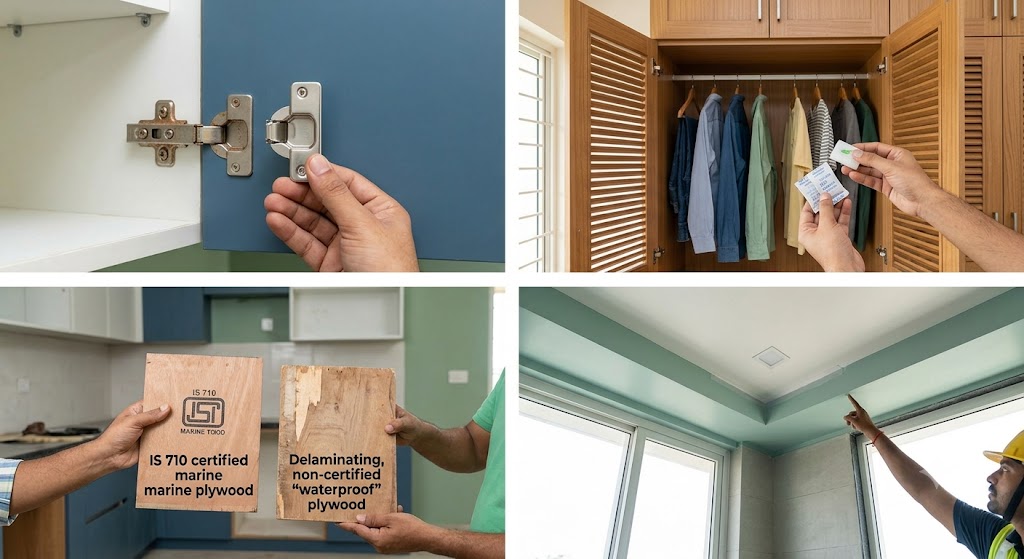
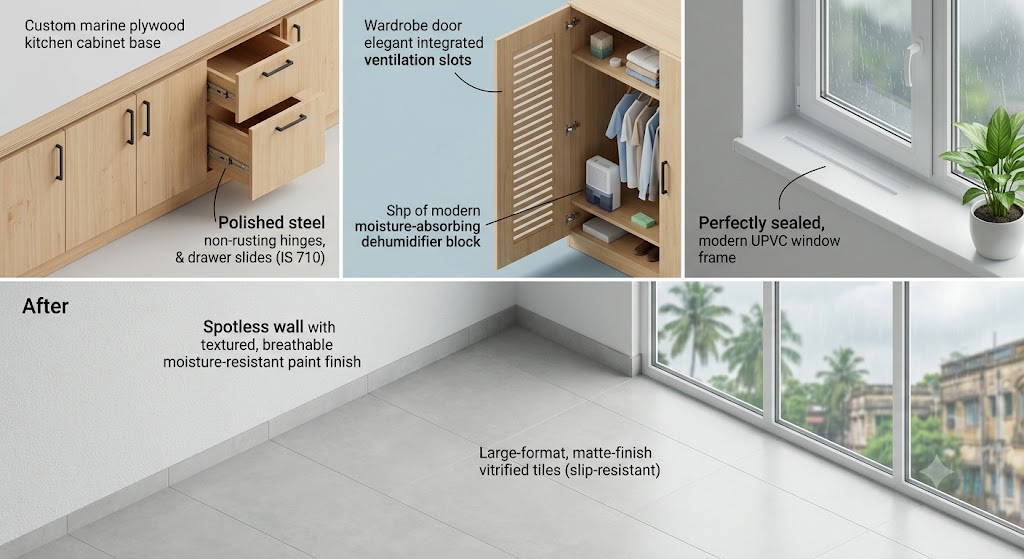
A lot of furniture sold as “waterproof” is actually only water-resistant — it can handle a splash, not months of damp air. Marine ply furniture is built with waterproof adhesive between every layer, so it holds its shape even in continuously humid conditions. It costs more upfront than commercial ply, but for kitchen cabinets, wardrobes, and bathroom units, it pays for itself by not needing replacement every few years.
When shopping for marine ply, ask for the ply’s IS 710 certification — the official Indian standard for marine plywood — rather than relying on the word “waterproof” printed on a board. This one check avoids most of the confusion between genuinely damp proof wardrobe design and ordinary ply with a waterproof-sounding name.
2. Pick the Right Paint and Finish
For walls, look for moisture resistant paint labeled specifically for damp-prone or coastal climates — they include additives that resist fungus and algae growth. Kitchens and bathrooms benefit from washable, semi-gloss finishes that don’t absorb moisture into the surface. A cheaper matt paint might look fine on the day it’s applied, but it’s usually the first to show damp patches once the season turns.
For exterior-facing walls, a breathable waterproof exterior paint — one that lets trapped moisture escape rather than sealing it in completely — tends to hold up better over multiple monsoons than a fully sealed coating.
3. Rethink Wardrobe and Storage Design
Closed wooden wardrobes without any ventilation are one of the biggest sources of the “monsoon smell” in Kolkata homes. Small design additions make a real difference to damp proof wardrobe design:
- Ventilation slots or louvered panels in wardrobe doors
- A small gap left at the base of built-in units instead of sealing them flush to the floor
- Moisture-absorbing sachets or silica gel packs placed inside during the wettest months
- Cedar or camphor blocks, which double up as a mild deterrent against silverfish that thrive in damp wood
4. Mind the Flooring Choices
Natural stone and matte-finish tiles handle humidity better than glossy tiles, which get slippery when there’s moisture in the air. Vitrified tiles with a slip-resistant rating are a reliable waterproof flooring option for balconies, kitchens, and entryways specifically. In entryways especially, a textured tile or a well-placed doormat area reduces both slip risk and water tracking into the rest of the home.
5. Don’t Ignore False Ceilings and Water Seepage Points
If a false ceiling is planned near an exterior wall or a bathroom, it’s worth checking false ceiling waterproofing at that junction before installation — a leak that shows up months later is far more expensive to fix once it’s behind a finished ceiling. Gypsum board handles humidity reasonably well, but only when the surface it’s fixed to is properly sealed first. In bathrooms, a moisture-resistant (MR-grade) gypsum board or a PVC panel alternative is a safer long-term choice than standard board.
6. Kitchen-Specific Precautions
Kitchens deal with a double dose of moisture — humidity from the air plus steam from daily cooking. A few tips for monsoon proof kitchen cabinets worth following:
- Keep a small ventilation gap under sink cabinets, since that area traps moisture longest
- Use stainless steel or powder-coated hinges and channels instead of plain mild steel, which rusts quickly
- Seal the joint between the countertop and the backsplash properly, since water seepage often starts at this junction
7. Balconies, Windows, and Entry Points
Balconies and windows are usually the first point of water entry. A slight outward slope in balcony flooring helps water drain away instead of pooling near the door threshold. Windows with a properly sealed frame and a small drip groove on the outer sill keep rainwater from running back toward the wall. For sliding doors and windows, checking the track for debris buildup before the season starts prevents water from collecting and seeping through worn seals.
8. A Simple Monsoon Maintenance Routine
Beyond one-time material choices, a short seasonal routine goes a long way for monsoon interior maintenance:
- Wipe down wardrobe interiors and leave doors open on drier days to air them out
- Check under-sink cabinets and bathroom vanity units monthly for hidden dampness
- Run exhaust fans in kitchens and bathrooms a little longer than usual to push out trapped humid air
- Inspect exterior walls and window sealant once mid-season, not just before the rains start
Monsoon Home Checklist for West Bengal Homes
| Area | What to Check |
|---|---|
| Exterior walls | Cracks or hairline gaps that let water seep in |
| Wardrobes | Ventilation, any existing swelling in doors |
| Kitchen cabinets | Under-sink area for hidden dampness |
| Window frames | Sealant condition and drip groove on the sill |
| Balcony flooring | Slope and drainage near the door threshold |
| False ceiling joints | Seepage marks near bathroom or terrace walls |
| Electrical points | Any switches or sockets near damp-prone walls |
Why This Matters for 2BHK and 3BHK Flats
Most flats in Kolkata are 2BHK or 3BHK layouts with limited cross-ventilation, especially in units facing narrow lanes rather than open sides. This makes trapped humidity a bigger issue indoors than the weather outside might suggest. Choosing the right materials at the design stage, rather than treating it as an afterthought, is usually the difference between a home that needs monsoon repairs every year and one that doesn’t.
Is It Worth Doing This Mid-Renovation or Only From Scratch?
Monsoon proofing doesn’t have to wait for a full renovation. Swapping wardrobe shutters for ventilated ones, redoing just the kitchen cabinet base, or repainting exterior walls with a better-suited finish can all be done as standalone fixes. Full waterproofing at the false ceiling or flooring level, though, is far easier and cheaper to get right during a renovation than to redo afterward.
About InfraLuxury
InfraLuxury designs and executes interior and renovation projects across Kolkata and West Bengal, with material choices suited to the region’s climate — from marine ply cabinetry to damp-resistant finishes. If you’re planning a renovation and want a home that’s genuinely built for the weather here, get in touch for a consultation.
FAQ
Q: Is marine ply necessary for every piece of furniture, or just kitchens and bathrooms?
A: It matters most where moisture exposure is highest — kitchens, bathrooms, and any unit near an exterior wall. Furniture in drier interior rooms can often use standard commercial ply without issues.
Q: How can I tell if my walls already have a moisture problem?
A: Look for a musty smell, slight bubbling under paint, or a cool, damp feel to the wall when touched. These are early signs worth addressing before the next monsoon.
Q: Does monsoon-proofing add a lot to the renovation budget?
A: It adds some cost upfront — mainly in material selection — but it’s far cheaper than repainting, replacing swollen furniture, or fixing seepage damage every year.
Q: What’s the difference between waterproof and moisture-resistant materials?
A: Waterproof materials block water from passing through entirely, like marine ply or MR-grade gypsum board. Moisture-resistant materials slow down water absorption but aren’t meant for constant or direct water contact. Knowing which one a room actually needs avoids overspending or underprotecting.
Q: Can I monsoon-proof just one room, like the kitchen, without redoing the whole house?
A: Yes. Kitchen cabinet bases, wardrobe shutters, and exterior wall paint can all be addressed as standalone fixes without touching the rest of the home.
Q: How often should false ceiling waterproofing be checked?
A: Once before the monsoon season begins is usually enough, along with a quick visual check mid-season for any new seepage marks near bathroom or terrace-facing walls.